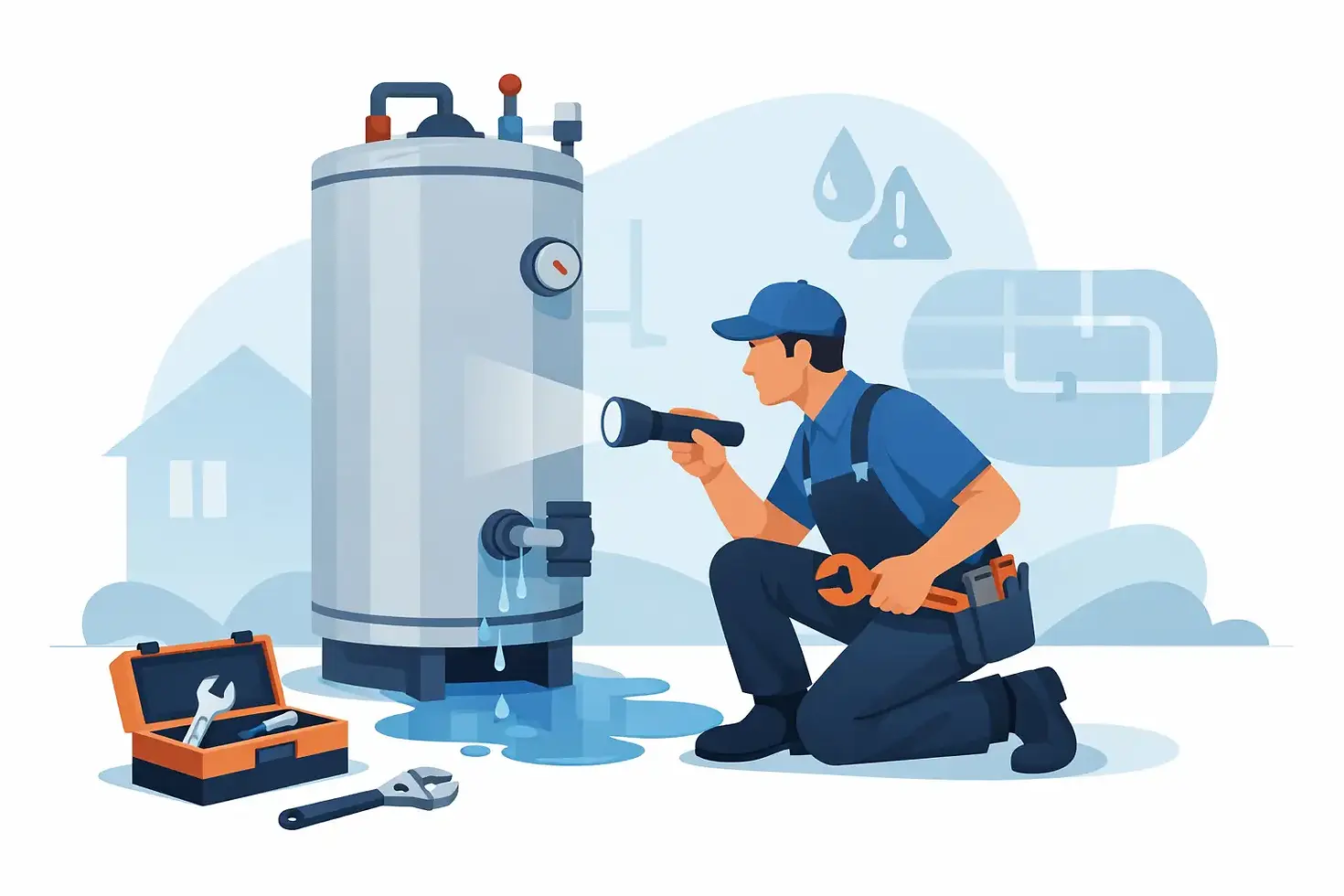
How to Fix Leaking Water Heater Issues
A puddle around the water heater usually shows up at the worst possible time - before work, during a home inspection, or right when you already have three other repairs on your list. If you are searching for how to fix leaking water heater problems, the first step is not grabbing a wrench. It is figuring out exactly where the water is coming from, because the right fix depends entirely on the source.
Some leaks are straightforward. A loose connection or a failing drain valve may be repairable in a single visit. Others point to tank failure, and no amount of patching will make that a good long-term solution. The goal is to stop damage quickly, make a smart repair decision, and avoid spending money on the wrong fix.
Start Here Before You Try to Fix Anything
If the leak is active, turn off power or fuel to the unit first. For an electric water heater, switch it off at the breaker. For a gas unit, turn the gas control to the appropriate off setting. Then shut off the cold water supply valve feeding the heater.
This matters for two reasons. First, it reduces the amount of water entering the tank. Second, it helps protect the unit from operating in an unsafe condition. If water is pooling near electrical components or you smell gas, stop there and call a professional.
Before assuming the tank itself is leaking, wipe the outside dry and check for condensation. In humid conditions, a water heater can sweat enough to look like it has a slow leak. That is a very different issue from a failed fitting or a cracked tank.
How to Fix Leaking Water Heater Problems by Source
The phrase how to fix leaking water heater issues sounds simple, but there is no single repair. Leaks usually come from one of a few common areas, and each one has its own fix.
Leak from the top connections
If water is dripping from the top of the heater, inspect the cold water inlet and hot water outlet connections. In some cases, the fitting has loosened over time. In others, corrosion has damaged the connection enough that tightening will not solve it.
A minor leak at a threaded fitting may be corrected by shutting the water off, draining pressure from the line, and tightening or resealing the connection. If the pipe or fitting is visibly corroded, replacement is usually the better option. This is especially true in older homes where one failing connection can be a sign that more plumbing repairs are close behind.
Leak from the temperature and pressure relief valve
The temperature and pressure relief valve, often called the T and P valve, is a safety device. If water is coming from this valve or its discharge pipe, the problem may be the valve itself, but it may also indicate excess pressure or overheating inside the tank.
This is where guessing can get expensive. Replacing the valve may fix the issue if the valve is worn out. But if high pressure is the real problem, the new valve may leak again. A proper diagnosis matters here because the valve is doing an important job, and ignoring it is not a safe option.
Leak from the drain valve
Near the bottom of the tank, you will find the drain valve. This can drip after flushing the tank or begin leaking as the valve ages. Sometimes a gentle tightening is enough. Sometimes the valve needs replacement.
This is one of the more repairable leaks, but only if the tank itself is still sound. If the leak appears to be coming from around the drain opening in the tank body, not the valve threads, that points to a bigger problem.
Leak from the bottom of the tank
This is the one homeowners hope not to find. If water is collecting underneath the heater and the fittings, valve, and supply lines all look dry, the tank may be failing internally.
Water heaters rust from the inside out. Once the tank has deteriorated enough to leak, replacement is usually the only responsible recommendation. Patching a leaking tank is not a real fix. It may buy a little time, but it does not restore the integrity of the unit.
When a Leak Is Repairable and When It Is Not
A good rule of thumb is this: if the leak comes from a replaceable part attached to the water heater, repair may make sense. If the leak comes from the tank body itself, replacement is typically the right move.
Age also matters. If your unit is already near the end of its expected service life, putting money into repeated repairs may not be the best use of your budget. Many standard tank water heaters last around 8 to 12 years, though maintenance, water quality, and usage can shorten or extend that timeline.
That is where a practical decision matters more than a temporary fix. A newer heater with a leaking valve may deserve repair. An older heater with corrosion at multiple points usually does not.
Signs the Water Heater Should Be Replaced
Sometimes the leak is only part of the story. If you also notice rust-colored water, inconsistent hot water, rumbling noises, visible corrosion, or frequent minor plumbing issues around the unit, replacement may be the better path.
This is especially relevant if you are preparing a home for sale or addressing inspection-related repairs. Buyers and agents tend to view a leaking water heater as both a maintenance concern and a potential damage risk. A clean replacement often makes more sense than a patch job that raises more questions later.
In Pennsylvania homes with basements or utility spaces, even a small leak can travel farther than expected. Flooring, drywall, trim, and stored belongings can all be affected if the issue is left alone for too long.
Common Mistakes to Avoid
One common mistake is assuming every puddle means the tank has failed. Condensation, nearby plumbing leaks, and even furnace or HVAC drainage can sometimes collect near the water heater and create confusion.
Another mistake is over-tightening fittings. That can damage threads, crack older valves, or create a worse leak than the one you started with. Water heater parts are not all forgiving, especially on aging equipment.
The biggest mistake, though, is waiting. A small leak can stay small for weeks, or it can become a major failure with no warning. If the unit is in a finished area, near drywall, or close to anything that can absorb water, delay gets expensive fast.
How a Contractor Approaches the Problem
A dependable repair visit should do more than stop visible dripping. It should confirm the leak source, assess the condition of the tank and fittings, and tell you clearly whether repair or replacement is the smarter choice.
That kind of transparency matters. Homeowners do not need a vague answer or a temporary patch sold as a permanent solution. Real estate agents do not need a repair that fails right before closing. You need a practical recommendation based on condition, safety, and cost.
If the leak is tied to broader issues - damaged flooring, drywall, trim, or surrounding plumbing - it also helps to work with a contractor who can handle more than one part of the job. That can save time and reduce the back-and-forth that comes with coordinating multiple companies for a single problem.
When to Call for Help
If you cannot identify the leak source quickly, if the tank appears rusted, if the relief valve is discharging, or if water is actively spreading, it is time to bring in a professional. The same goes for any gas-related concern or electrical exposure.
For homeowners in Shippensburg, Harrisburg, Chambersburg, and Lancaster, this is the kind of repair that benefits from a straightforward assessment. J Hershey Construction approaches these issues the way homeowners need them handled - clearly, practically, and with an eye on the full condition of the property, not just the nearest puddle.
A leaking water heater is not always a worst-case scenario, but it is never a repair to ignore. The right next step is simple: stop the water, identify the source, and make the fix that actually protects your home instead of just buying a little time.


Comments