How to Repair Home Foundation Problems
A sticking door on the first floor, a stair-step crack in the brick, or a basement wall that suddenly looks bowed - those are the moments homeowners start searching how to repair home foundation issues fast. The right response is not panic. It is getting clear on what you are seeing, what caused it, and whether the fix is cosmetic, structural, or part of a larger moisture problem.
Foundation trouble rarely starts as a single isolated issue. Water drainage, soil movement, age, poor grading, plumbing leaks, and freeze-thaw cycles can all play a role. That is why the best repair is not always the most aggressive one. A good repair solves the movement itself, not just the crack it left behind.
How to repair home foundation issues starts with the cause
Before anyone reaches for concrete patch, epoxy, or a jack post, the first step is understanding why the foundation moved. If the cause is active, any surface repair may fail again.
In many homes, water is the main driver. Gutters that dump near the foundation, downspouts that stop too close to the house, clogged drains, or yard grading that pitches water toward the home can soften soil and create settlement. In other cases, dry conditions shrink certain soils and let footings drop. Some homes also show movement from old construction methods, undersized supports, or repeated seasonal expansion and contraction.
Inside the home, watch for drywall cracks over doors and windows, sloping floors, doors that rub, and gaps between trim and walls. Outside, look for cracked masonry, leaning porches, separated steps, or horizontal and stair-step cracks in foundation walls. One symptom does not tell the whole story. The pattern matters.
Which foundation problems can be repaired
Most foundation problems can be repaired, but not all with the same method. Hairline shrinkage cracks in poured concrete are often cosmetic if there is no displacement and no water intrusion. Wider cracks, recurring leaks, bulging walls, and visible settlement usually need more than a simple patch.
Block foundations often fail differently than poured concrete. Masonry block walls may bow inward under soil pressure or water buildup. Poured concrete walls may crack vertically or diagonally from settlement. Stone foundations in older homes can need repointing, drainage work, and selective rebuilding. Crawl spaces introduce another category, where failing piers, moisture, and sagging framing can mimic foundation failure.
The practical point is simple: repair methods should match the problem. Sealing a crack helps with water penetration, but it does not lift a settled footing. Installing piers can stabilize movement, but it will not solve basement moisture if grading and drainage are still wrong.
Common ways to repair a home foundation
Crack repair is the most familiar approach, but it is only one piece of the picture. For non-structural or limited structural cracks in poured concrete, epoxy or polyurethane injection may be used. Epoxy can bond concrete back together in some situations, while polyurethane is often used to stop water infiltration. These repairs can be effective when the wall is otherwise stable.
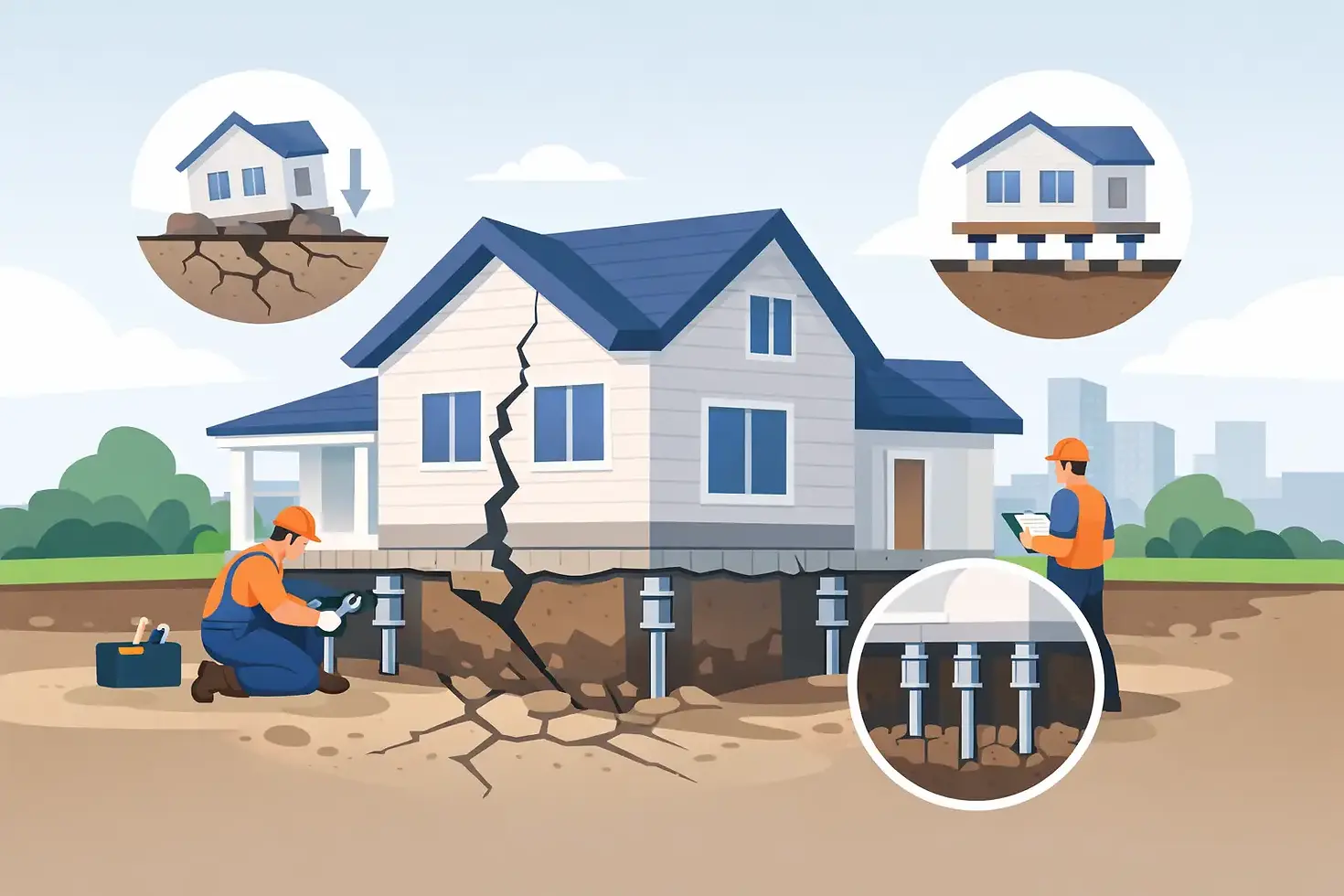
When settlement is the issue, underpinning may be needed. This often means installing piers beneath the footing to transfer the load to more stable soil. Helical piers and push piers are common options. The choice depends on soil conditions, access, load requirements, and the amount of movement. This is not a casual weekend project. It requires proper layout, equipment, and a plan for long-term performance.
For bowing or leaning basement walls, reinforcement may involve wall anchors, carbon fiber straps, or steel braces. Carbon fiber works well in the right conditions, especially when movement is limited and the wall can be stabilized before major displacement occurs. Wall anchors or steel systems may be better for more advanced bowing. If hydrostatic pressure is pushing on the wall, outside drainage improvements are often part of the fix.
In crawl spaces, repairs may include replacing failed piers, adding support posts, installing beams, sistering joists, and correcting moisture issues. If a plumbing leak is washing out soil below the home, that must be fixed before structural corrections hold.
When a DIY repair makes sense
Homeowners can handle some minor foundation-related tasks, but only if the issue is truly minor. Sealing a small, non-moving crack after it has been evaluated can make sense. Extending downspouts, cleaning gutters, regrading soil away from the home, and improving surface drainage are also smart steps that often protect the foundation from further trouble.
A DIY patch does not make sense when cracks are widening, walls are shifting, floors are dropping, or water keeps returning. The risk is not just wasted time. Covering over symptoms can make it harder to spot ongoing movement and may delay a repair until it becomes more expensive.
If you are preparing a home for sale, quick cosmetic fixes can also backfire. Buyers, inspectors, and appraisers tend to focus on foundations for good reason. A clean-looking patch without a clear explanation of the underlying issue may raise more concern, not less.
How to repair home foundation problems the right way
The right way starts with inspection and documentation. Measure crack widths, note whether doors or windows have become harder to open, and watch for changes over time. Photos help. If movement appears active, that is valuable information for a contractor.
Next, address moisture and drainage. Even if structural repair is needed, water control is usually part of the job. That can include extending downspouts, correcting grading, installing drainage systems, repairing plumbing leaks, or managing groundwater around the house.
Then match the repair to the structure. A basement wall taking on lateral pressure needs a different fix than a settled corner of the home. A crawl space with weak supports calls for framing and support correction, not just concrete patch. This is where experience matters. The best outcome usually comes from treating the house as a system rather than chasing one visible crack at a time.
What foundation repair usually does not fix
Foundation work can stabilize the home and protect value, but it does not automatically reverse every symptom. Some cracks in drywall may need separate repair after the structure is stabilized. Floors may improve, but not return perfectly level in every house, especially older homes. Doors and trim may need adjustment. Exterior masonry may need repair once movement is stopped.
That does not mean the repair failed. It means structural correction and finish repair are often two different phases. Homeowners appreciate this more when expectations are set clearly from the start. Transparency matters here, especially if the property is heading toward inspection, appraisal, or listing.
Cost depends on scope, not just the crack
One of the biggest mistakes homeowners make is trying to estimate cost from a single symptom. A visible crack might need a straightforward injection repair, or it might be the sign of footing settlement, drainage failure, and wall reinforcement needs. Those are very different jobs.
Access, soil conditions, foundation type, finish materials, and whether repairs are inside or outside all affect price. So does timing. Small issues usually cost less to address than advanced movement with secondary damage to walls, floors, and finishes.
For homeowners and agents in Pennsylvania, speed also matters when a sale is involved. If a foundation issue shows up during inspection or appraisal, a contractor who can evaluate the bigger picture and handle related repair work can save time and coordination headaches. That all-in-one approach is often the difference between a straightforward repair path and a drawn-out transaction.
When to call a contractor right away
Call for professional help if you see horizontal cracks in a basement wall, wall bowing, significant stair-step cracking in masonry, standing water near the foundation, sudden floor slope changes, or repeated sticking of interior doors and windows. The same goes for homes with visible separation between walls and ceilings, sinking porches, or signs that a support beam or crawl space pier has shifted.
A dependable contractor should tell you what is urgent, what can wait, and what other parts of the house may be affected. That kind of clarity matters more than hearing the biggest or cheapest fix first. Quality you see starts with the repair itself. Transparency you trust starts with an honest assessment.
Foundation problems can feel intimidating because they touch the part of the house everything else sits on. But most situations become more manageable once the cause is identified and the repair plan fits the real problem. If you are seeing early warning signs, the smartest move is to act while the issue is still contained and before small structural changes turn into larger repairs throughout the home.


Comments